
From “Just Asking Questions” to Political and Religious Influence Campaigns
From “Just Asking Questions” to Political and Religious Influence Campaigns
The Expanding Public Record Around Stefanie Fetzer and North Idaho Activism
What began publicly as a narrative about “just asking questions” during local political races has evolved into a much broader documented pattern involving:
- long-term political activism
- religious and church-oriented influence language
- candidate targeting
- ideological gatekeeping
- reputational escalation
- activist organizing
- public pressure campaigns
- social media narrative shaping
The screenshots, activist records, archived posts, and public commentary collected over time reveal a sustained progression from ordinary political disagreement into increasingly personal, moral, religious, and reputational warfare.
The strongest conclusion supported by the evidence is not conspiracy.
The stronger and more defensible conclusion is:
a sustained blending of political activism, spiritual authority, moral framing, and reputational escalation operating across years and communities.
California Activist Roots
Parents United 4 Kids & Freedom Angels
Long before involvement in North Idaho political battles, Stefanie Duncan Fetzer publicly participated in California activist ecosystems centered around:
- anti-lockdown protests
- constitutional activism
- statewide organizing
- parental rights activism
- protest coordination
- PAC activity
This establishes continuity and long-term activism rather than spontaneous concern over local Idaho politics.
Stefanie forming Parents United 4 Kids
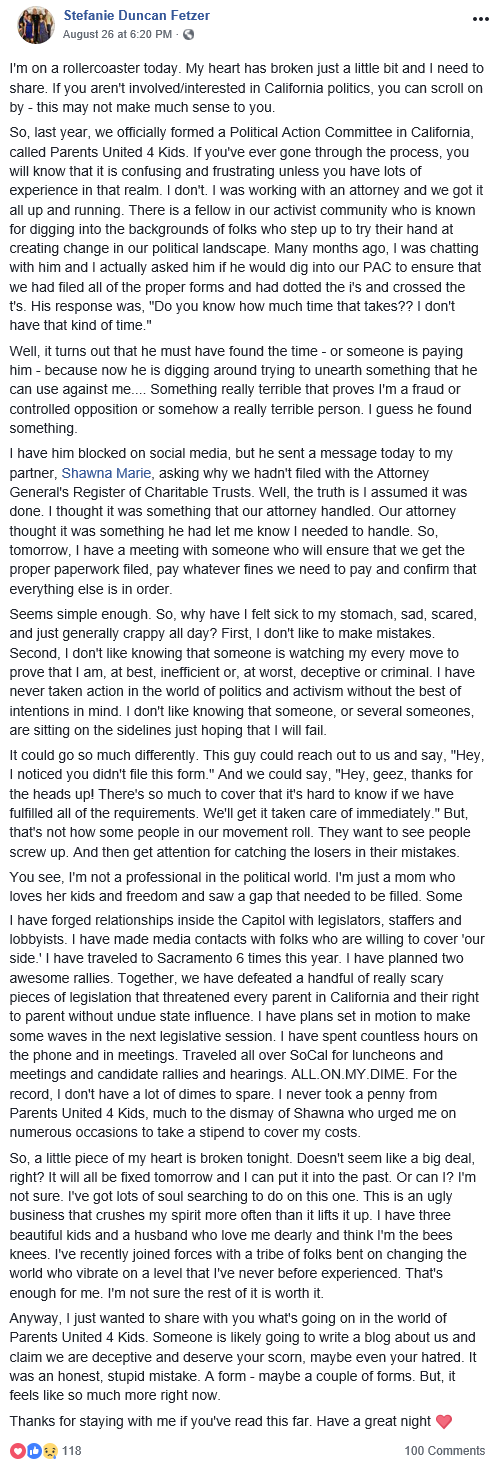
Parents United 4 Kids Endorsement Post
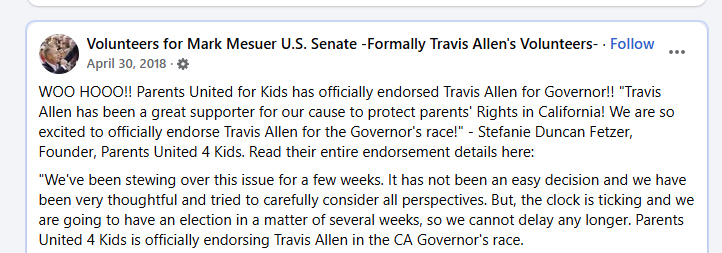
Freedom Angels Foundation thanking Stefanie Duncan Fetzer
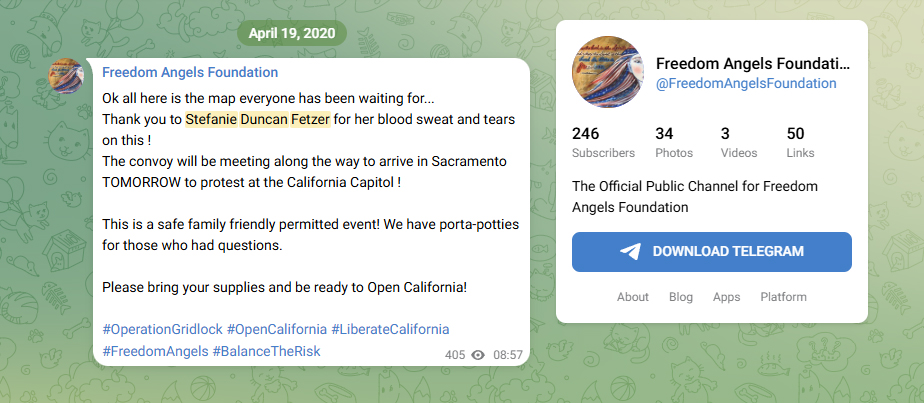
April 23, 2020 Protest Planning Message
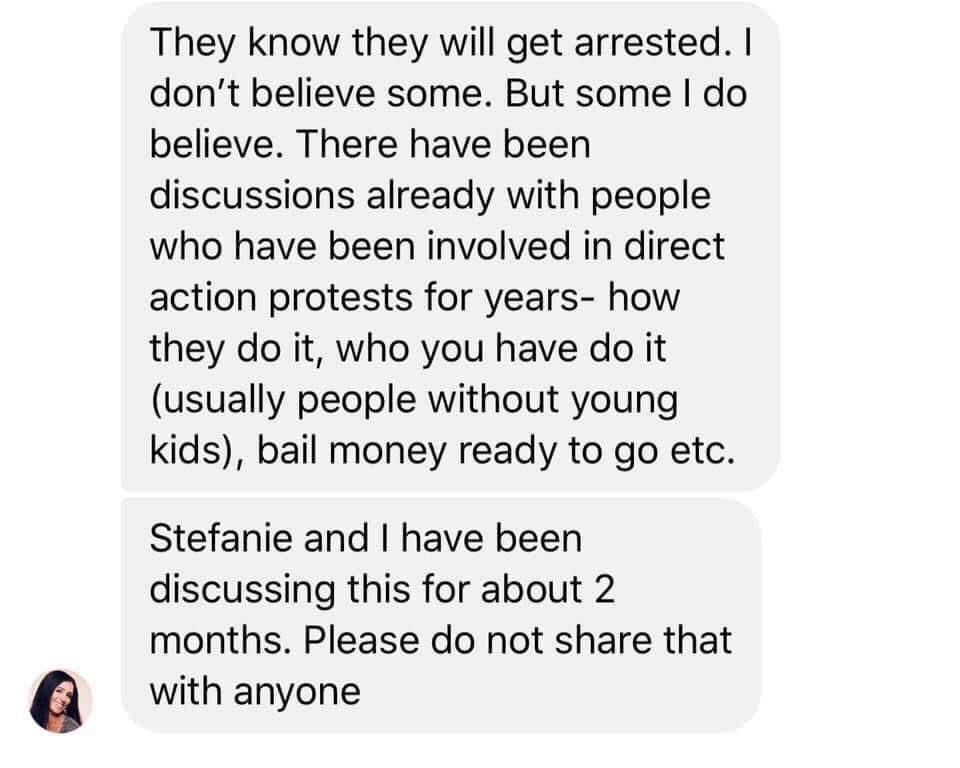
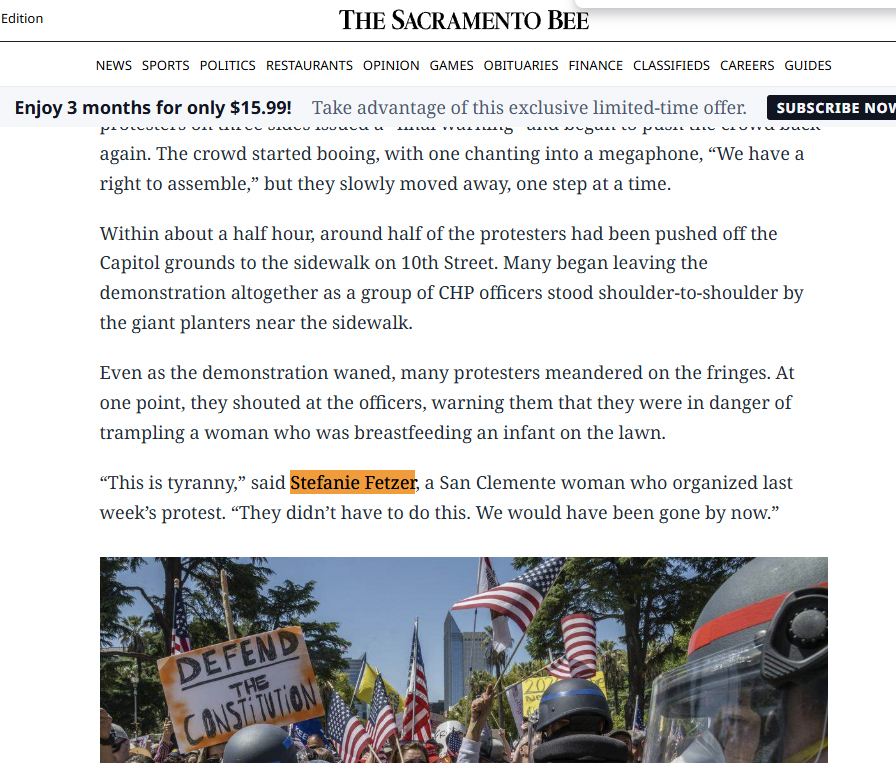
Sacramento Bee Quote: California Activism
Activist Networks & Ideological Ecosystems
The public record increasingly connects overlapping activist ecosystems involving:
- Freedom Angels
- anti-lockdown movements
- constitutional activism
- ideological coalition building
- activist legal networks
Some screenshots reference overlap with controversial activist figures and organizations.
Important distinction:
This article documents:
- associations
- collaborations
- overlapping movements
- shared activism
It does NOT claim direct membership in organizations unless independently verified.
Freedom Angels/Scientology Association
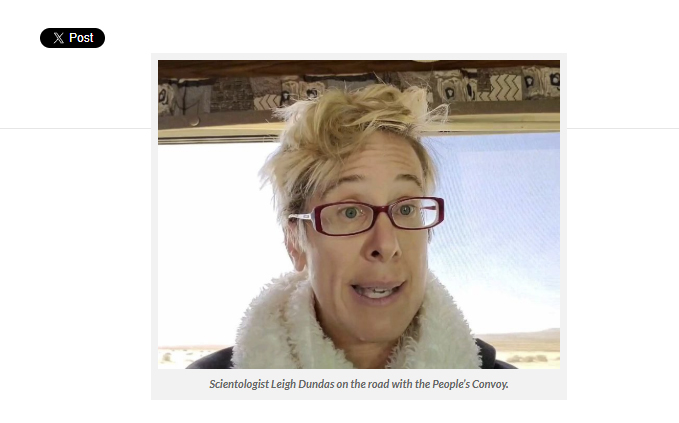
Leigh Dundas Scientology Completion Records
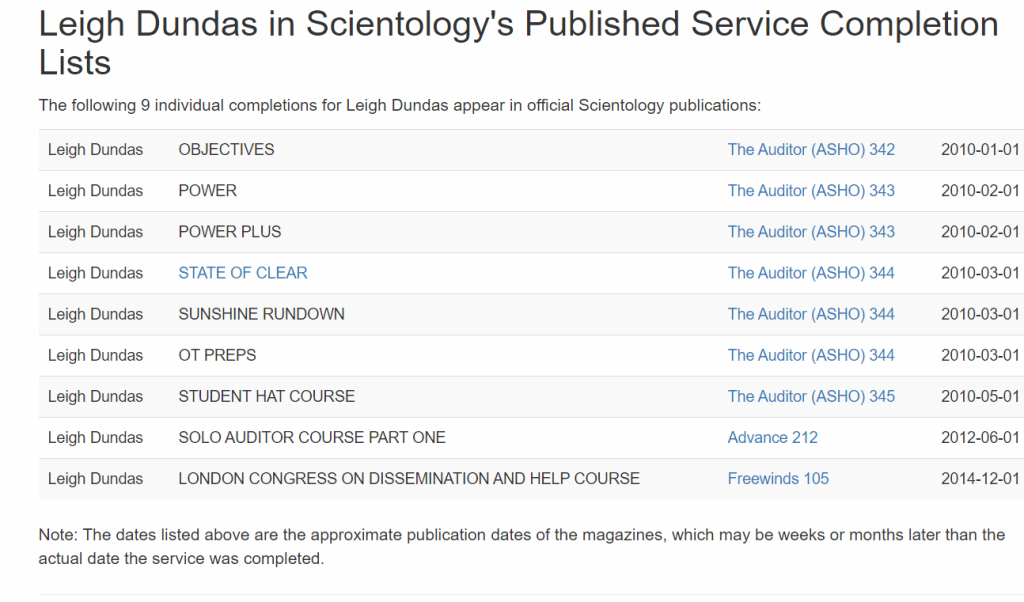
Leigh Dundas Human Rights Attorney With The Freedom Angels
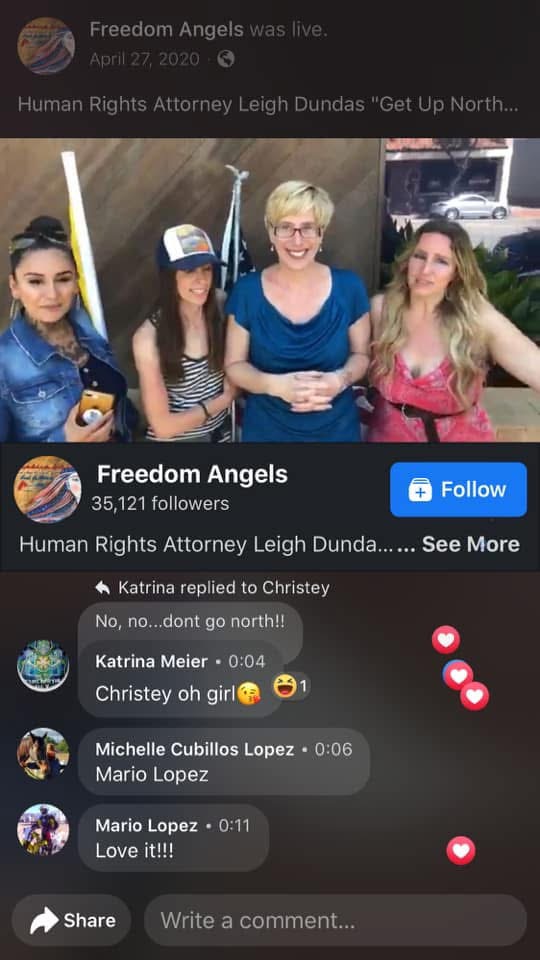
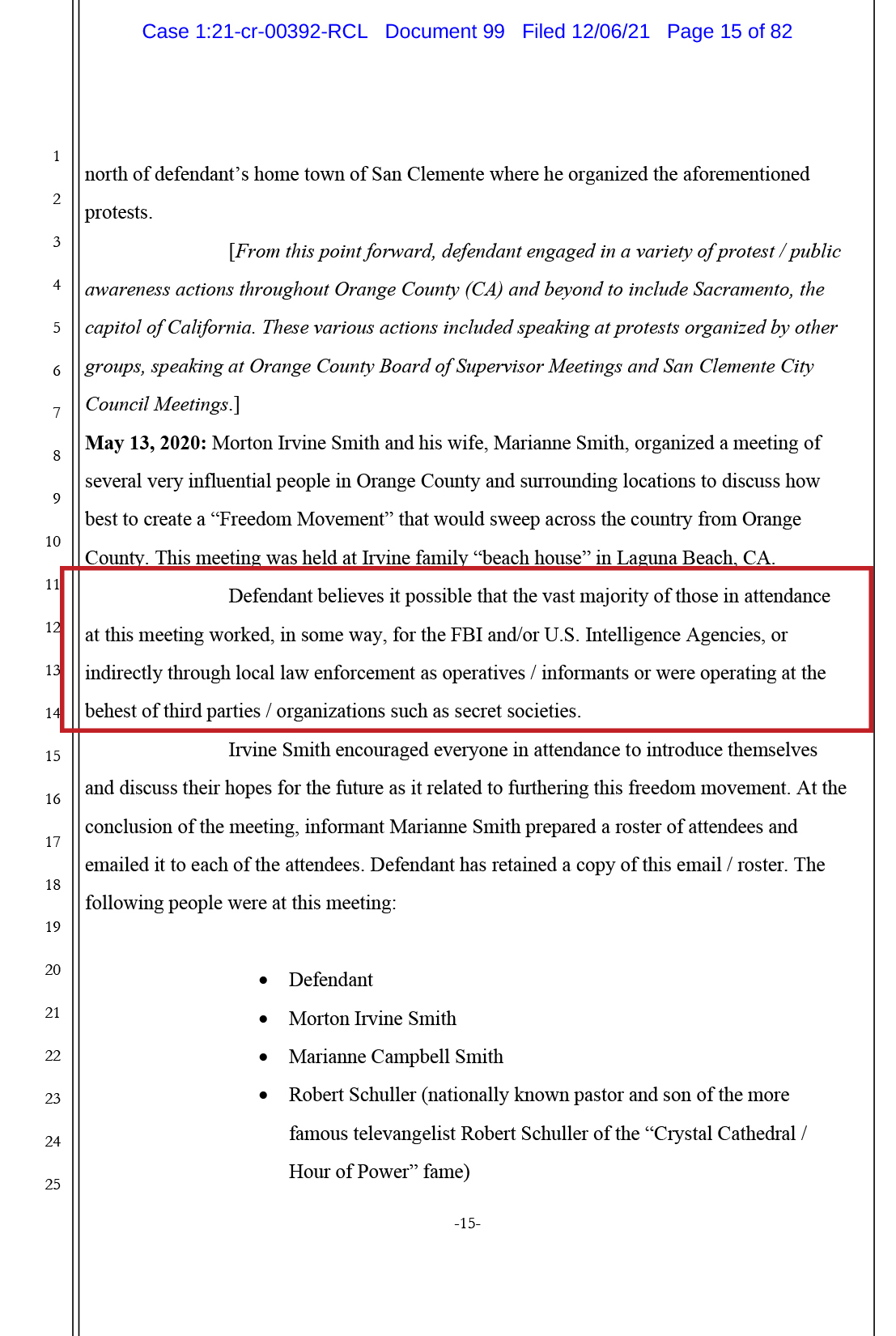
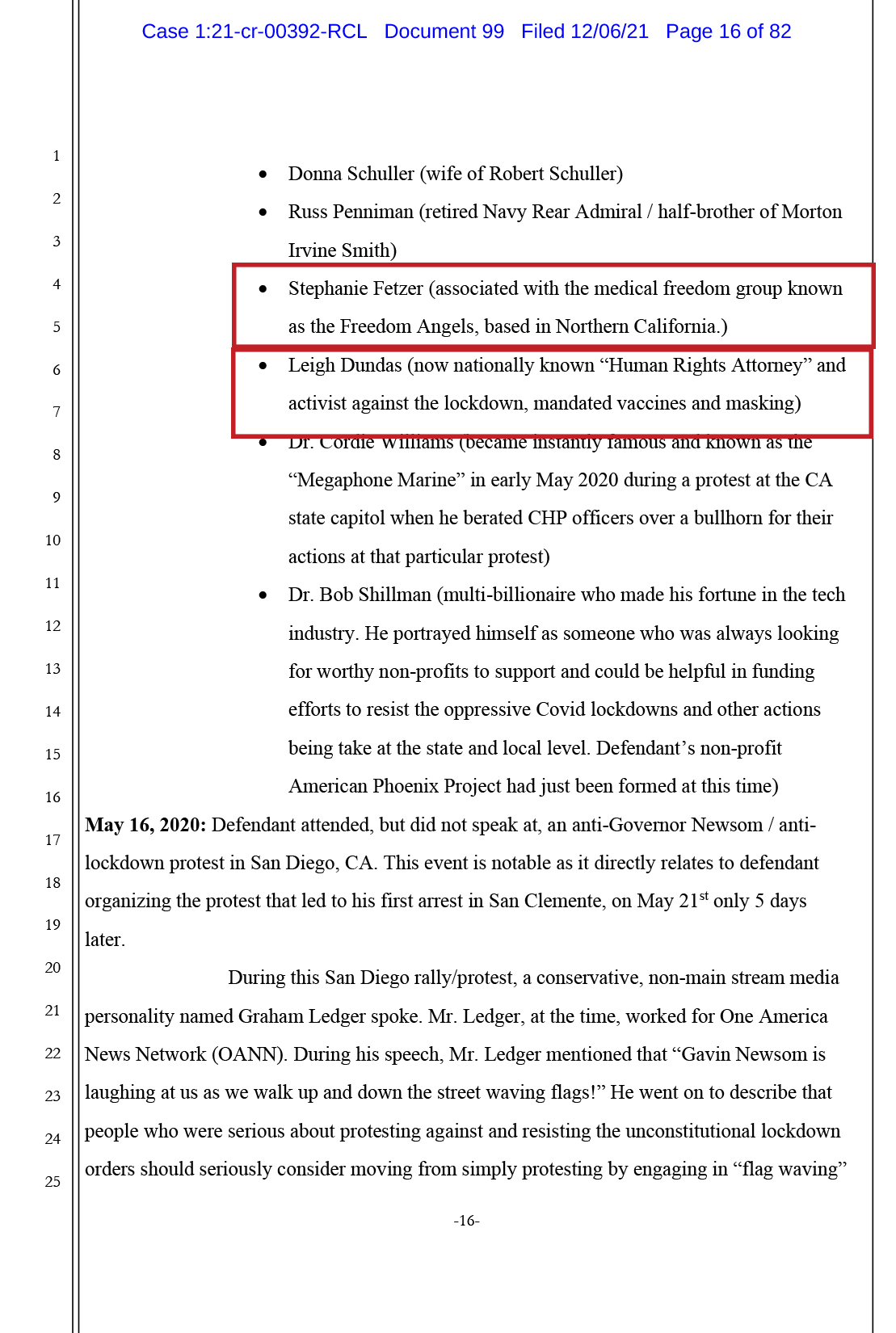
Alan Hostetter Court Filing Mentioning Stefanie Fetzer and Leigh Dundas
Transition Into North Idaho Politics
Over time, the activism transitions from California statewide organizing into North Idaho political and social influence campaigns.
The messaging increasingly centers around:
- “real conservatives”
- “fake conservatives”
- ideological purity
- church influence
- political legitimacy
- narrative enforcement
A recurring theme appears:
defining who is morally and politically acceptable within the community.
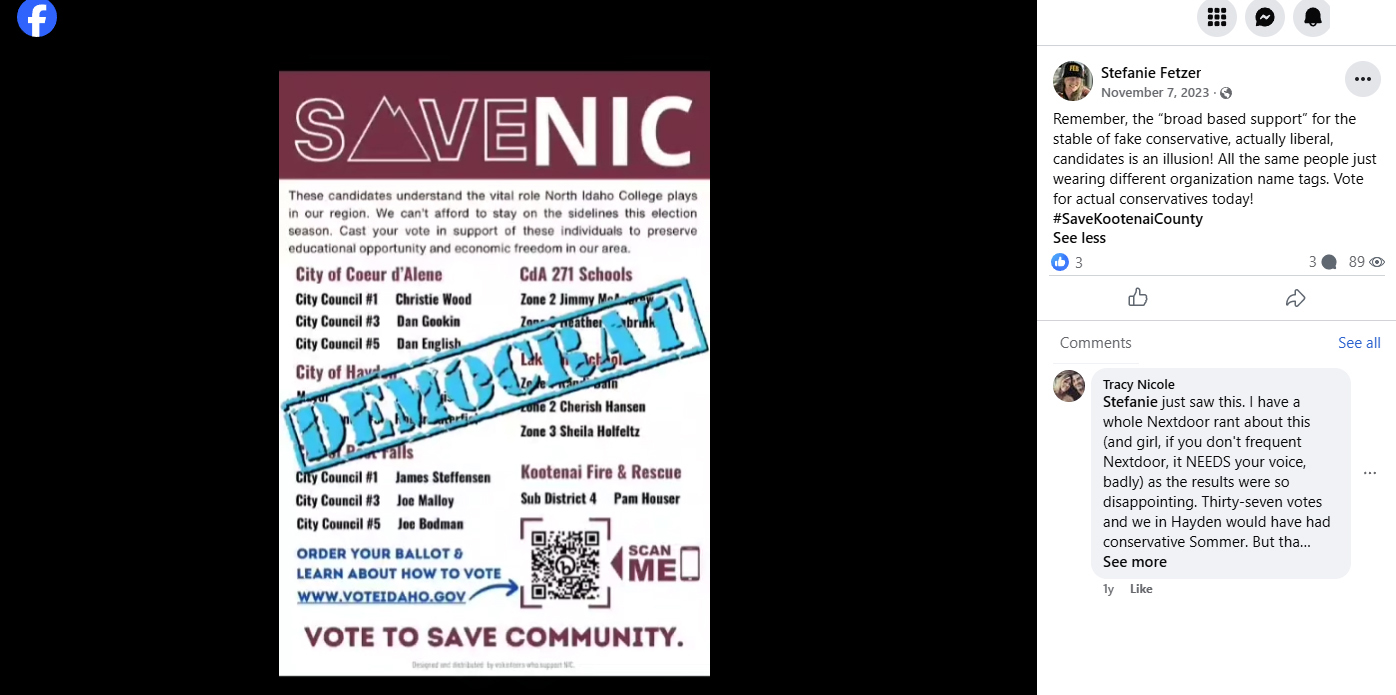
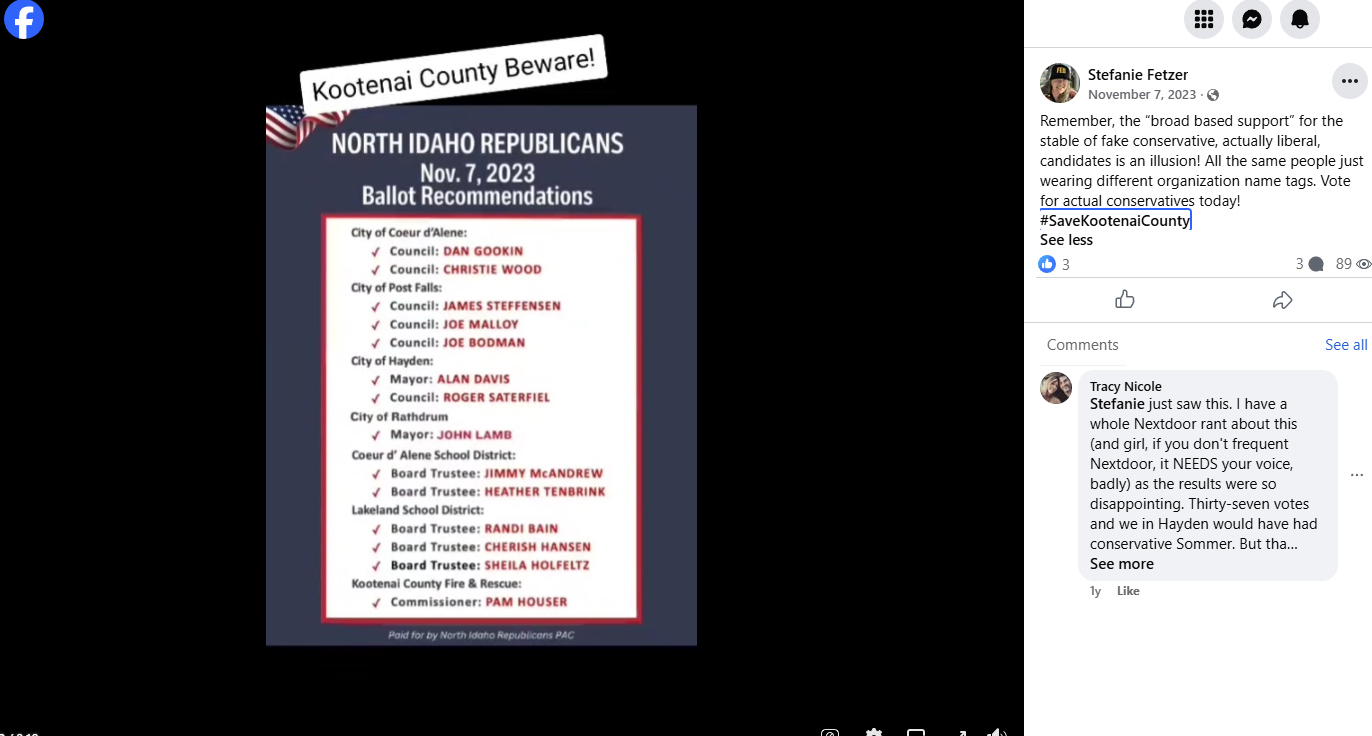
Stefanie Fetzer’s Save NIC/Fake Conservative Posts
Biblical Citizenship Promotion Post
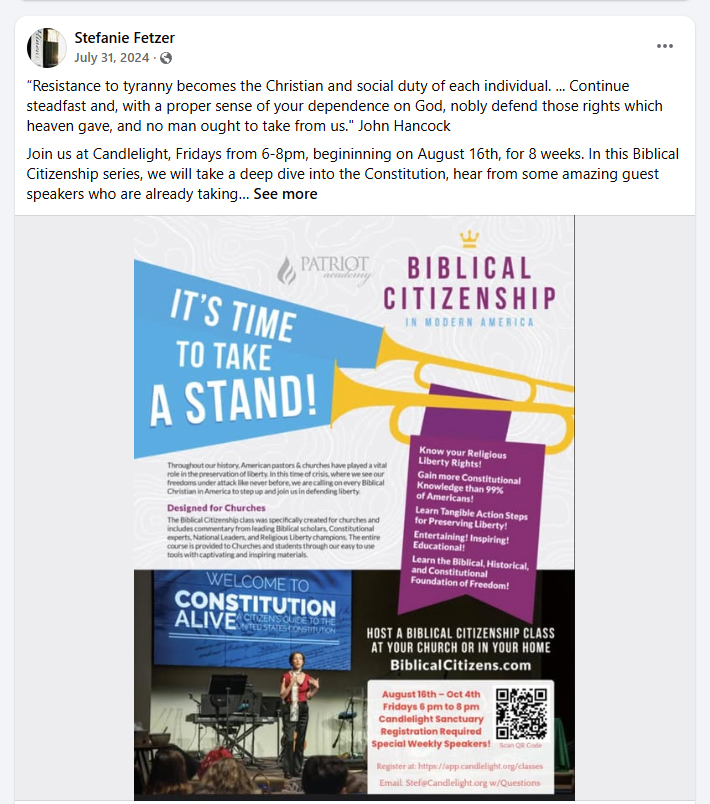
“Just Asking Questions” vs Observable Conduct
One of the clearest patterns throughout the screenshots is the repeated use of plausible deniability framing.
Common examples include:
- “I’m just asking questions”
- “people are saying”
- “someone should ask”
- “I’m concerned”
- “receipts are coming”
- “I’m speaking for myself”
However, the actual conduct documented repeatedly escalates beyond simple questioning.
Repeated self-positioning as harmless grassroots participant
“I’m just a mom who got mad about 20 years ago and I’m working to ensure that my kids and their kids have a good place to live.”
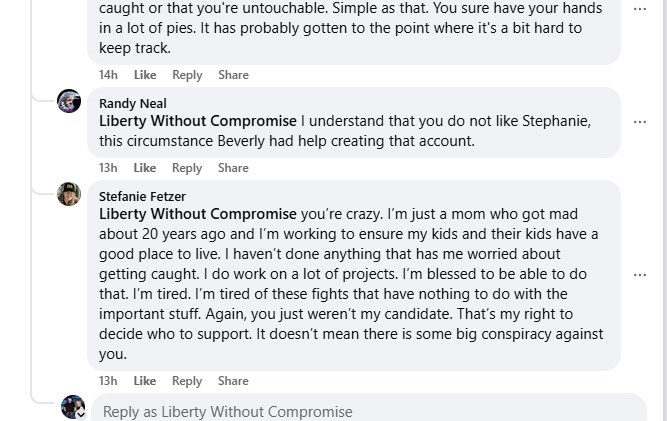
Continued escalation framing
“Pretty sure you’ll have some receipts in the next several days. Question is, will you even look at them?”
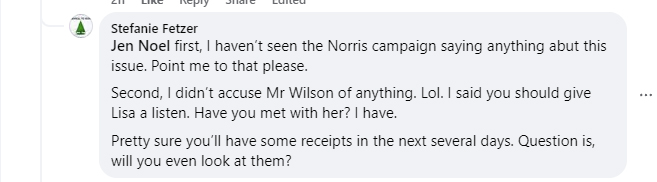
Escalation into family related narratives
“Ask him why he dropped out of the guardianship battle for his daughter…”

Escalation Beyond Politics
The public record later escalates well beyond ordinary political disagreement.
The screenshots increasingly involve:
- family members
- abuse insinuations
- guardianship references
- mental health narratives
- public safety implications
- guilt-by-association rhetoric
- extremist framing
- reputational contamination
This marks a major turning point.
The rhetoric transitions from:
political opposition
to:
reputational warfare
Ryan McClintock Manipulation Claims: Post implying Dan and Dawna Wilson manipulated a mentally unstable individual
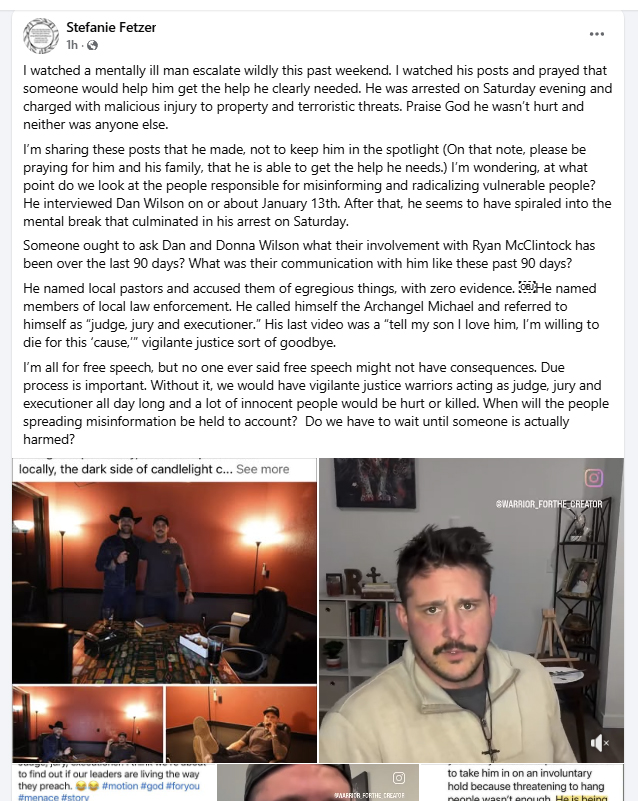
Claims tying Wilsons to dangerous behavior escalation
“Dan Wilson is 100% responsible for the attack on the Kootenai County Sheriff’s Office.”
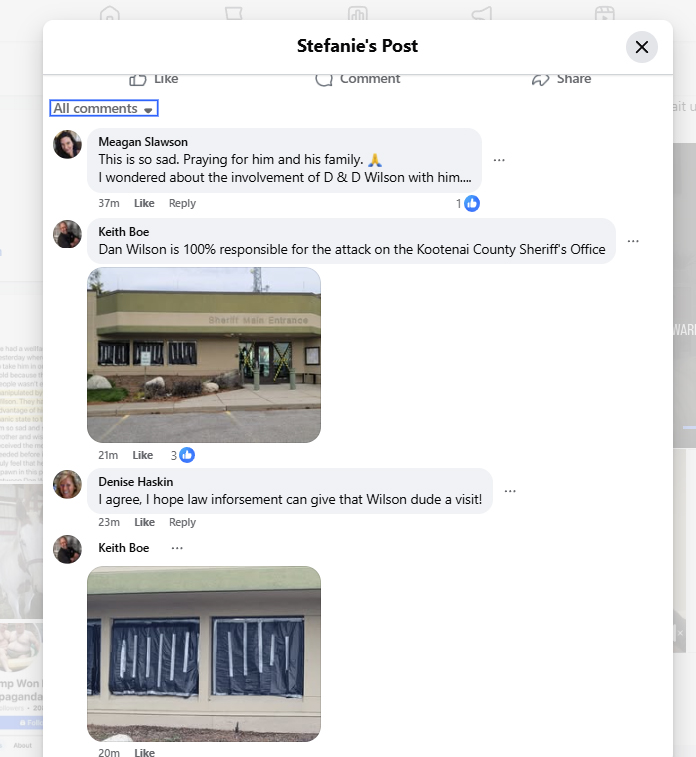
Antisemitism/Racism Accusation: Attemps to morally and socially disqualify Wilson supporters

Relentless badgering to discredit
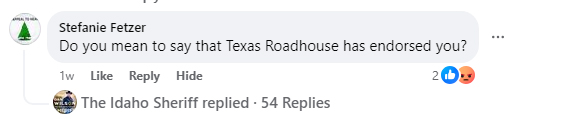
Public insinuation framing involving false claims: Claims already disproven
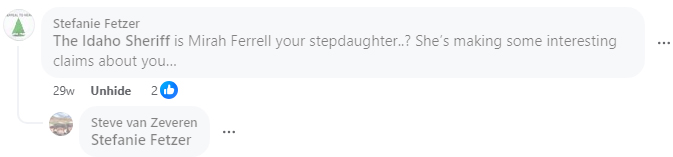
Religion, Church Influence, and Moral Authority
Another major pattern emerging from the screenshots is the blending of:
spiritual authority with political legitimacy
Posts repeatedly invoke:
- God’s guidance
- discernment
- “true conservatism”
- moral standards
- pastoral leadership
- prayer
- Christian duty
- spiritual legitimacy
This is important because political disagreement increasingly becomes framed as:
- moral compromise
- lack of discernment
- spiritual failure
- extremism
- corruption
Spiritual framing of public conflict
“God told me, “Let me fight. You just be patient.”
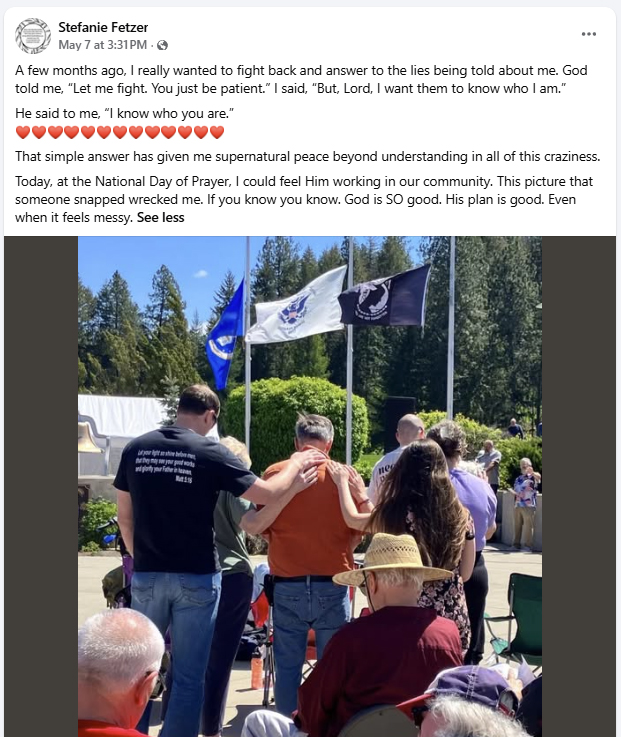
Defending Pastor Paul Van Noy
Public defense of church leadership while framing opponents as morally compromised
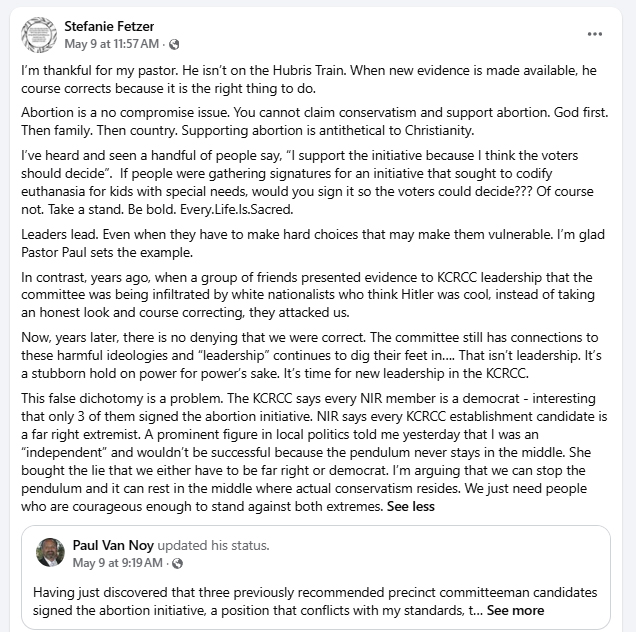
“Enemy tactics”
Religious framing of political and ideological conflict
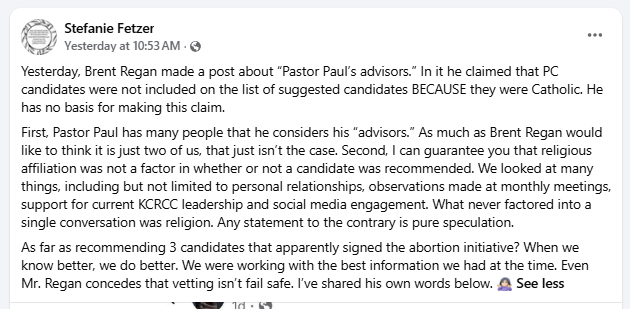
Political Advisor To Pastor Paul Van Noy
“We looked at many things…”
Victimhood and Moral Authority Simultaneously
A recurring rhetorical pattern appears throughout the public posts.
The messaging repeatedly positions Stefanie Fetzer as:
victimized
while also positioning herself as:
morally discerning and spiritually authoritative
Examples include:
- “I’m being attacked”
- “lies are being told about me”
- “God knows who I am”
- “leaders lead”
- “Christians should do better”
- “raise the standard”
This dual positioning is rhetorically powerful because criticism can then be reframed as:
attacking a faithful Christian woman.
Religious Victim Framing
He said to me, “I know who you are.”
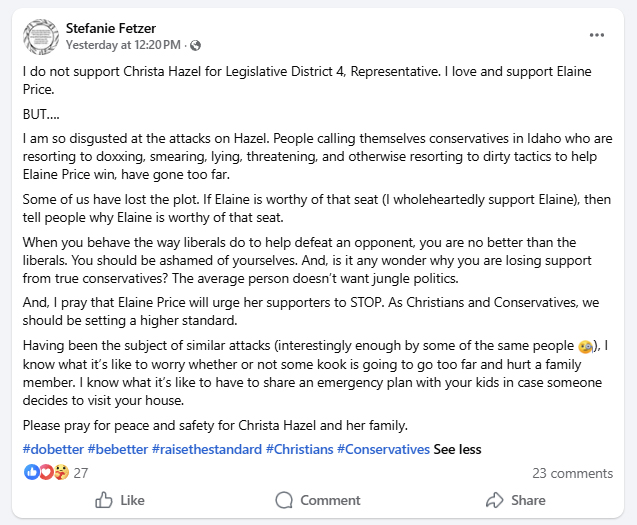
Moral authority framing while criticizing political opponents
As Christians and Conservatives, we should be setting a higher standard.
Victim positioning while discussing community conflict
I know what it’s like to have to share an emergency plan with your kids in case someone decides to visit your house.
The Emerging Pattern
Taken together, the screenshots, archived posts, articles, activist records, PAC involvement, protest organizing, church-centered messaging, and political commentary reveal something far larger than:
simple candidate preference.
The strongest observable pattern is:
the blending of political activism, spiritual legitimacy, ideological enforcement, and reputational escalation.
The evidence reflects:
- long-term activist continuity
- narrative shaping
- church and moral influence language
- social pressure campaigns
- guilt-by-association tactics
- escalating personal narratives
- ideological gatekeeping
- surrogate-style campaigning
- public reputational targeting
Importantly, the documented behavior appears inconsistent with repeated public claims that this was merely about supporting a different political candidate.
Conclusion
The public record surrounding Stefanie Fetzer no longer reflects isolated social media disagreement.
Instead, it documents a sustained ecosystem involving:
- political activism
- moral framing
- church-centered influence
- ideological enforcement
- reputational escalation
- narrative shaping
- public pressure tactics
Whether viewed as aggressive grassroots activism, ideological influence operations, or community power struggles, the evidence demonstrates one thing clearly: